Hokkaido
Driving in Hokkaido
What the roads are actually like, what changed on 1 September 2026, and the ¥50,000 hole in the insurance advice everyone repeats.
Some links in this article are affiliate links. If you book through one, I receive a commission and you pay exactly what you would have paid anyway. It does not change what I recommend — the price comparison below is built from list prices I collected myself, on a date I have stated, and the working is shown.
§ 01
Why this article exists
I live in Sapporo and I drive here all year, including the months people are nervous about. That is the only qualification behind this article, and it is also its limit, so let me be exact about both.
What I can tell you is what these roads are actually like, what the traffic really does, and where the things you looked up will let you down. What I cannot tell you is what it is like to hand an international permit across a rental counter as a foreign visitor, because I have never done it. Everything here about rental terms, insurance and licensing comes from the companies’ own published conditions and from Japanese law, with the date I checked each one.
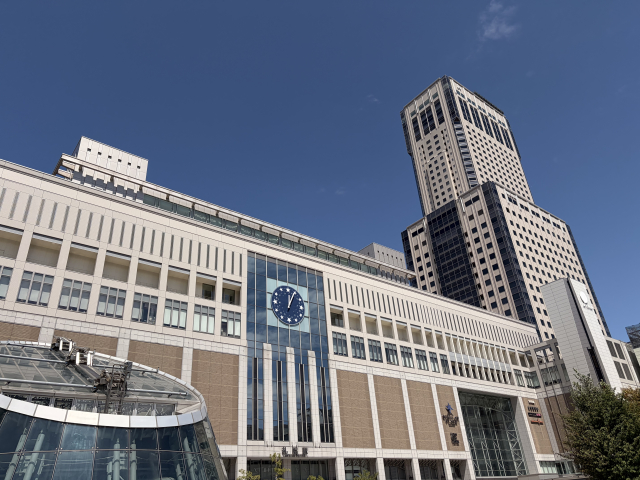
Two things prompted me to write it. The first is that on 1 September 2026 a default speed limit in Japan changed, and most English-language driving guides still describe the old rule. The second is that the advice everyone repeats — take the full insurance — is incomplete in a way that can leave you paying ¥50,000 you thought you were covered for.
§ 02
What changed on 1 September 2026
The default speed limit on Japan’s narrow residential streets dropped from 60 km/h to 30 km/h. This applies where there is no posted sign and the road has no centre line, no lane markings and no central divider — the small streets, in other words.
Roads with a centre line, roads with separated carriageways, and motor-vehicle-only roads are unchanged at 60 km/h. But if you are reading an English guide written before September 2026, its account of Japanese speed limits is now wrong in the exact place a visitor is most likely to be driving slowly and looking for a parking space.
§ 03
Speed, and the number that actually matters
If you read forum threads about driving in Hokkaido, one complaint appears more than any other: that local traffic moves well above the posted limit, that holding to the limit feels unsafe, and that you end up with somebody sitting on your bumper.
The observation is accurate. What is usually missing is the number that decides how much trouble you are in.
Speeding here is handled in two entirely different ways, with a hard line between them. On an ordinary road, exceeding the limit by less than 30 km/h is a non-criminal matter settled with a fixed penalty: ¥9,000 under 15 km/h over, ¥12,000 for 15–20, ¥15,000 for 20–25, ¥18,000 for 25–30. You pay it and it ends there.
At 30 km/h over on an ordinary road, it stops being a fine. It becomes a criminal offence carrying up to six months’ imprisonment or a fine of up to ¥100,000, and it carries six demerit points. Six points suspends your licence immediately, with a clean record and no prior history.
On expressways the criminal threshold is 40 km/h rather than 30. English write-ups routinely quote a single figure for both, which is wrong.
So the practical reading. Ten or twenty over — which is roughly what the traffic around you is doing — puts you in fixed-penalty territory. Crossing 30 over on an ordinary road puts you in a police station and ends your driving for the rest of the trip. With hotels booked ahead of you, that is not an expense. That is the trip.
There is a second point, and visitors tend to have it backwards. Driving much slower than the surrounding traffic is not the safe option. On a two-lane road, one car doing 50 in a 60 with a dozen behind it creates the overtaking pressure that causes the crash. Holding the limit is a defensible choice — but keep left, and let people past when the road allows it.
One more thing, and it recurs throughout this article. The fact that local drivers do something is not permission to do it. They are not better protected than you are. They are just used to it.
Where enforcement actually happens
You will find claims online about the number and location of fixed speed cameras in Hokkaido. I cannot verify any of them, because the police do not publish camera locations. What Hokkaido Police do publish is their enforcement priority list: the specific stretches they concentrate on, with the limit in force on each.
| Route | Section | Limit |
|---|---|---|
| Do-o Expressway (north) | Bibai – Takikawa | 100 km/h |
| Sasson Expressway | Sapporo JCT – Sapporo-nishi | 80 km/h |
| Do-o Expressway (south) | Sapporo-minami – Chitose | 100 km/h |
| Do-to Expressway | Shimukappu – Dai-ni Karikachi Tunnel | 70 km/h |
| Hidaka Expressway | Atsuma – Hidaka Tomikawa | 70 / 80 / 100 km/h |
Note the Do-to figure. Seventy, on a road that looks like it ought to be a hundred. That is the one that catches people out.
§ 04
Why you cannot tell what the limit is
This is the complaint I have most sympathy with, because the answer is not guessable. Where there is no sign, the default depends on a class of road that visitors reasonably assume does not exist.
- National Expressway (高速自動車国道) — default 100 km/h
- Motor-vehicle-only road (自動車専用道路) — default 60 km/h, the same as an ordinary road
- Ordinary road — 60 km/h, or 30 km/h on the narrow residential streets described above
The middle one is the trap. A motor-vehicle-only road looks like an expressway: grade separated, no traffic lights, long curves. Its statutory default is 60. In practice most such roads carry posted limits of 70 or 80, which is precisely why you have to read the signs there instead of assuming.
The 120 km/h sections you may have heard about are not a higher default. They are specific stretches raised by sign. The statutory figure is still 100.
Then there are the electronic signs — a digital display inside a red ring, mostly on expressways. These are variable limits, lit when conditions call for a lower number. Visitors report driving for long stretches seeing them unlit and having no idea what applies. I looked for an official statement on what an unlit variable sign means and could not find one, so I am not going to invent a rule. What I can tell you is the statutory default for that class of road, above.
§ 05
Your phone is calibrated for a driver who is not you
Plan Hokkaido the way you would plan a trip around Kansai and it will not survive contact with the island. Hokkaido is roughly the size of Austria with a fraction of the population, and itineraries that put Hakodate in the far south and Wakkanai in the far north into the same ten days are a common sight on travel forums. They do not work.
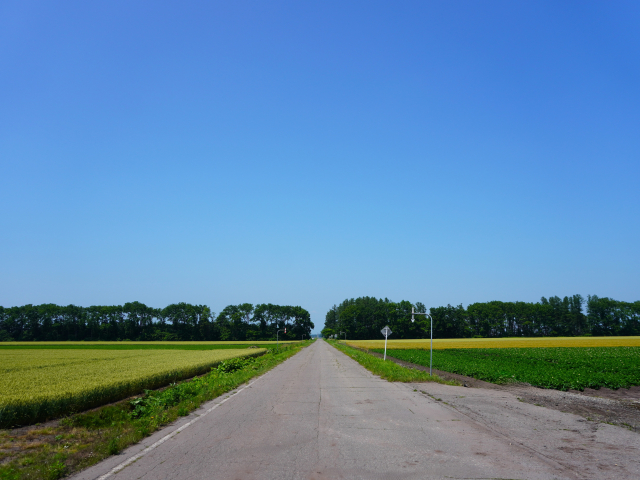
The subtler problem catches careful planners. Navigation apps estimate arrival times from how fast traffic actually moves on a road, not from the posted limit. On Hokkaido’s expressways, where real traffic runs comfortably above the sign, this means your ETA is quietly built on speeds you may not want to drive. Hold the limit and you will arrive late on every single leg, consistently. Visitors describe finding themselves at 120–130 km/h purely to stay on the schedule their phone handed them.
The same applies to the route itself, and I come back to that further down, because in winter the fastest line through a city is not the one you want.
Build your own schedule with margin. Do not treat the estimate as a plan.
§ 06
Your licence: settle this before you book anything
Get this wrong and you lose the car at the counter, with no remedy available in Japan.
Japan recognises international driving permits issued under the 1949 Geneva Convention only. Permits issued under the 1968 Vienna Convention are not valid here.
For readers in the United States, United Kingdom, Australia and Canada: all four are Geneva signatories, so a standard IDP obtained at home is what you need. Get it before you fly. You cannot obtain one in Japan.
The distinction that trips people up is this: it is not about which convention your country belongs to, it is about which form your permit takes. Many countries are party to both. If yours is, make sure the permit you are issued is the Geneva-format one.
There is a second route, and it is narrow. Drivers holding licences from Switzerland, Germany, France, Belgium, Monaco and Taiwan may drive here on their home licence accompanied by an official Japanese translation instead of an IDP. Six jurisdictions, no more. You will find English guides listing seven and adding Estonia; that comes from a prefectural police page last updated in 2018 and is no longer correct.
Translations must come from an approved body: the issuing authority or that country’s embassy in Japan, the Taiwan-Japan Relations Association for Taiwanese licences, ADAC for German licences, or JAF. JAF accepts applications online only and quotes two to three working days for the six jurisdictions above.
One detail that catches long-stay visitors: your permission to drive runs for one year from the date you entered Japan, and is separately limited by the permit’s own one-year validity from issue. Both conditions apply at once. If you are here for several months and your IDP was issued well before you flew, count carefully.
§ 07
What to add when you book, and what it actually protects
Here is the part every guide gets half right.
The standard advice is to take the collision damage waiver. That is correct as far as it goes, and it does not go far enough, because Japanese rental companies charge on two separate layers.
The collision damage waiver (CDW), around ¥1,100 per 24 hours, removes your excess. Without it you are liable for roughly ¥50,000 on the vehicle and ¥50,000 on third-party property. With it, that drops to zero.
The non-operation charge (NOC) is a different thing entirely, and CDW does not cover it. It compensates the company for revenue lost while the car is off the road. If the car is still drivable and you return it to the agreed branch, ¥20,000. If it is not drivable, ¥50,000. At some companies the top figure reaches ¥100,000 depending on vehicle class.
Times Car Rental states it about as plainly as it can be stated: the charge applies even if you have joined the CDW course.
To remove the NOC you need a second, separate product. Every company sells one, under a different name and at a different price.
| Company | CDW / 24h | NOC (drivable) | NOC (not drivable) | NOC waiver product |
|---|---|---|---|---|
| Toyota | ¥1,100 | ¥20,000 | ¥50,000 | Anshin W Plan ¥1,650 |
| Nippon | ¥1,100–2,200 | ¥20,000 | ¥50,000 | ECO ¥440/day |
| Nissan | plan-based from ¥1,650 | ¥20,000–50,000 | ¥50,000–100,000 | Full Support from ¥2,200 |
| ORIX | ¥1,100 | ¥20,000 | ¥50,000 | RAP ¥660 |
| Times | from ¥1,100 | ¥20,000–50,000 | ¥50,000–100,000 | Anshin Hosho +¥1,100 |
| Nicoco | from ¥1,100 | ¥20,000 | ¥50,000 | Menseki Plus from ¥1,650 |
So, corrected: take both. Somewhere between ¥440 and ¥1,650 extra per day removes a worst case of ¥100,000. Over seven days that is ¥3,000–11,000 to close the gap. I would pay it, and I would pay it on the cheapest available basis, since the effect is the same.
Winter equipment, and dates you were not expecting
In Hokkaido the major companies fit winter tyres as standard — you do not request them. Standard is not the same as free: several apply a winter season surcharge to the vehicle rate instead, typically ¥660 per day.
The season runs longer than visitors assume. Not December to March. Toyota’s Sapporo, Asahikawa, Hakodate, Kushiro and Kitami branches run winter tyres from 1 November to 5 May. Nippon, 1 November to 20 April. Times, 1 November 2026 to 15 April 2027. Travelling in late October or in April puts you inside the winter window. There is a reason for that, and I come to it below.
Four-wheel drive is a separate charge at most companies, around ¥1,650 per day — but Nippon includes 4WD as standard on winter rentals at no extra cost, and ORIX includes it on some wagon classes. Over a week that is an ¥11,550 difference, enough to change which company is cheapest.
ETC card, age, licence tenure
An ETC card lets you pass toll gates without stopping and settle at the end. Most companies rent them for ¥330–550. Times does not rent ETC cards at all — you are expected to bring your own, which visitors generally cannot. Worth knowing before you book with them.
ORIX and Times state no minimum licence tenure. Nicoco does not allow drivers under 21, or those licensed less than a year, to buy the additional coverage at all, and requires a passenger with three or more years’ tenure. If you are young, read the terms before you book on price alone.
§ 08
What seven days actually costs
This is where the comparison gets interesting, because the companies bundle differently and the headline rate misleads.
Compact class, seven days, winter, with 4WD and with both CDW and NOC waiver — like for like:
| Company / class | Base | Coverage (CDW + NOC) | 4WD | Seven-day total |
|---|---|---|---|---|
| Nippon SS | ¥66,220 | ¥10,780 | included | ≈ ¥77,000 |
| ORIX S | ¥53,900 | ¥12,320 | ¥11,550 | ≈ ¥77,800 |
| Times compact | ¥56,000–63,000 | ¥15,400 | ¥11,550 | ≈ ¥83,000–90,000 |
| Toyota C1 | ¥66,066 | ¥11,550 | ¥11,550 | ≈ ¥89,200 |
Look at ORIX’s base rate — ¥53,900, far below everyone else. Then look at the total. Once the NOC waiver and 4WD go on, it lands within ¥800 of Nippon, which looked ¥12,000 more expensive at the top of the column.
Cheapest to dearest is about ¥12,000, or 16%. Real money, but a fraction of what the base rates imply, and not the ranking you would get by sorting a comparison site by headline price.
Two caveats. Nippon’s rate here is a seasonal campaign, so check whether it is running for your dates. And the Times total does not reflect the ETC card problem, which is an inconvenience rather than a cost.
Because those totals move with the season and the branch, pull a live quote for your own dates before you commit. Most visitors collect the car at one of two gateways — New Chitose Airport for Sapporo and the south, or Asahikawa for the centre and north. Both are affiliate links: they cost you nothing extra and do not affect the comparison above, which uses list prices I collected myself. What happens at New Chitose between landing and driving away — the counter, the bus to the branch, and when the branch closes — is set out separately.
§ 09
Winter, and how long it actually lasts
Two whiteouts stand out for me. One was January, on the expressway near Ebetsu. The other was early April, heading south toward Hakodate — and that is the one worth dwelling on, because nobody plans for a blizzard in April.
The road stays open longer than you would expect. You can be on an expressway, in traffic, at a reasonable speed, and unable to see the front of your own car. In January, heading north toward Iwamizawa and Asahikawa, I have had the expressway close under me more than once. Dropping down onto the surface roads does not fix it. It is the same weather with more intersections.
Two things still surprise me, and I drive here every winter. The first is that local drivers carry on more or less as normal, and that this is not permission. The second is how tiring it is. An hour of following the tail lights ahead of you, at a distance you are not comfortable with, takes more out of you than four hours of ordinary driving. I have pulled over because the wipers had iced up past the point of doing anything, and cleared them by hand.
So when you plan a winter itinerary, that is what to build in. Not just slower averages — though yes — but the possibility that the road simply closes, and the certainty that a day spent driving through weather is not a day you can follow with another one like it.
Now look again at those rental winter-tyre dates. 1 November to 20 April, or to 5 May. The companies are not being cautious. They are describing the season.
§ 10
Ice, and why the equipment is not the answer
The first time it properly caught me out was in early November. Not deep winter — the sort of day that sits two or three degrees above freezing, where whatever fell overnight has turned to water by lunchtime. By late afternoon the temperature drops back, all that water becomes ice, and the road looks wet rather than frozen.
I was coming back into Sapporo from Ebetsu, downhill, and the light ahead turned red. I braked in good time. The ABS did exactly what it is designed to do — I could feel it working — and the car did not stop. I went over the stop line on a red, and there was nothing left to do about it from the moment I touched the brake.
That is the part worth understanding before you drive here in winter. The equipment was working. Winter tyres, anti-lock brakes, a driver on a road he knows. None of that turns ice into asphalt. What keeps you out of that situation is having slowed down earlier — before there was any visible reason to.
One practical note. If you were taught to pump the brakes on a slippery surface, that instruction predates anti-lock brakes and does not apply to a modern car. The system does the modulating. Beyond that I am not going to give you a braking technique, because the honest answer is that no technique rescues you from ice you have already arrived at too fast.
§ 11
The four o’clock rule
My own rule is simple: be where I am sleeping by four. Not five, not “before dark” — four.
Four is already dark.
| Date | Sapporo sunset | Full dark |
|---|---|---|
| 1 December | 16:02 | 16:34 |
| 21 December | 16:02 | 16:35 |
| 1 January | 16:09 | 16:41 |
| 15 January | 16:23 | 16:55 |
| 1 February | 16:45 | 17:15 |
| 1 March | 17:22 | 17:51 |
The reason it is four and not five is not the darkness by itself. It is what darkness does to ice.
Black ice is something you read with your eyes. The sheen. A surface that looks wet when it has no business being wet. The way the colour shifts across a lane. Headlights take most of that away. In daylight you have some chance of seeing the thing you are about to slide on. At night you are largely guessing — and by then you have been driving all day.
So in winter the practical driving day ends at about half past three. Not six, which is roughly what a visitor assumes. That is three hours taken out of every day of your itinerary, and it is the biggest single reason winter trips here come apart.
Book your accommodation before you fix your driving legs, not after. In winter the daylight decides the day.
§ 12
Deer
The stretch that stays with me is the road from Sapporo down to Lake Shikotsu and on toward Chitose, on an October evening. Not one deer. Dozens of them, standing on the verge, in ones and twos and small groups, for kilometre after kilometre. None of them moved. All of them could have.
That is the part nobody prepares you for. A deer crossing in front of you is a moment — you brake, it passes, it is over. Deer standing beside the road for forty minutes is something else. You cannot brake for a possibility. You can only sit at a speed you could actually stop from, watching both verges, for far longer than feels reasonable. And the temptation, once nothing has happened for twenty minutes, is to decide that nothing will.
Two rules that matter more than the watching. If one animal crosses, wait — they travel in groups and the second one is the one that hits you. And if a deer does step out, brake hard and stay in your lane. Swerving is how people end up in the oncoming carriageway or off the road entirely, and a collision with a deer is survivable in a way that those are not.
Autumn is the season for it. October and November are when collisions peak.
§ 13
Fuel
The one that nearly caught me out badly was a night drive from Kushiro back to Sapporo. I set off around ten. I had meant to fill up in Obihiro and forgot, and somewhere near Yubari the low fuel light came on.
I did what you would do. I looked up the service areas ahead, found one that had a fuel station, and pulled in. It was closed. Not out of fuel — closed. The service area itself was open, the lights were on, the toilets and the vending machines were working, and the pumps were shut for the night.
I came off the expressway at Chitose-higashi and found fuel with very little to spare.
The lesson is not “fill up more often”, although you should. It is that the information you can look up will tell you a fuel station exists, and will not reliably tell you when it is open. On a Hokkaido expressway at night, a fuel symbol on a map is not a promise.
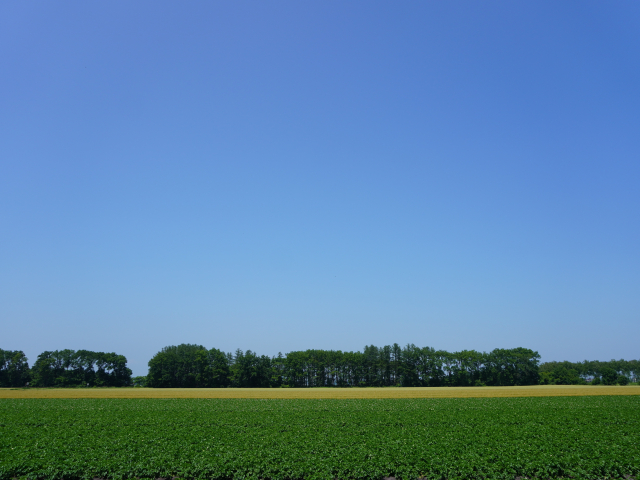
Rural stations close early and many shut on Sundays. Between towns, in the east and the north, treat half a tank as your reserve rather than a quarter, and fill before you commit to a long empty stretch rather than during it.
§ 14
In town: the snow walls
City driving has its own version of all this, and it is the one thing I actively route around.
By February the ploughed snow along the kerbs in Sapporo stands higher than the roof of a van. At an intersection without lights, that means you cannot see the crossing road at all, and the crossing road cannot see you. Pulling out is genuinely unpleasant.
What you do is edge out. Get the nose of the car past the wall far enough to be visible — that is the point, being seen rather than seeing — then move forward in small increments as more of the road opens up. It is slow, it feels ridiculous, and it is the normal way to do it here. Pedestrians and cyclists come out of the same blind gaps, so the same care applies at every side street and driveway.
The other half of it is a routing decision. In winter I will take a longer way round in order to use intersections with traffic lights. Your navigation app will not do this for you. It optimises for time, and in a grid city like Sapporo the fastest line is a series of uncontrolled crossings between two-metre walls of snow. A few extra minutes to stay on signalled roads is the cheapest thing you can buy for your safety here.
§ 15
What you can stop worrying about
Since most of this article is about things to take seriously, here are two that visitors raise which are smaller than they look.
Tunnels. The ones people describe as narrow and dark are on the old coastal roads around the Shakotan peninsula. They are genuinely tight, and if that route is on your list, go in expecting it. The expressway tunnels heading east are a different proposition entirely — there are a lot of them, they are wide, and they are unremarkable to drive.
Traffic. Visitors sometimes arrive having read about congestion at Japanese motorway exits, with cars queueing along the hard shoulder. In Hokkaido this is not really a thing. Central Sapporo exits and the end of the Sapporo Shindo get busy, more so in winter, but outside the city you will not meet the sort of queueing that surprises people elsewhere in Japan. If you do see cars using the shoulder, stay in your lane — being unhurried is worth more than the two minutes.
§ 16
If something happens
Report it to the police. Always, and before anything else.
Every one of the six companies above states that coverage does not apply if the accident was not reported and their procedures were not followed. Times puts it bluntly: do not settle at the scene, because doing so voids your insurance and waiver.
This matters more for visitors than for residents, because the instinct in a minor scrape — exchange details, agree a figure, move on — is exactly the thing that removes your protection. The police report is what makes the paperwork work. ORIX specifically notes that hit-and-run damage and theft from the vehicle require a police report to be covered at all.
The number is 110. You do not need good Japanese to use it.
§ 17
Before you book
- Confirm your international permit is the 1949 Geneva format, and get it before you fly
- Check it will still be within one year of issue on the last day you drive
- Set your dates against the winter tyre window — 1 November to mid-April or later
- Compare totals with CDW and NOC waiver included, not base rates
- Check whether 4WD is included or extra at your chosen company
- If you are booking Times, arrange an ETC card another way
- Build the route from real journey times, not from the scale of the map
- Book accommodation before you fix the driving legs — in winter the daylight decides the day
- In winter, plan a recovery day after any long leg. You will want it
For a worked example of this on one route — where to pick up the car, where to stay, and how the seasons change the drive — see the Furano–Biei driving route.
Prices and rental terms checked 6 August 2026 against each company’s published information. Speed limit figures reflect the Road Traffic Act Enforcement Order as amended, effective 1 September 2026. Enforcement sections from Hokkaido Police, May 2026. Licensing from the National Police Agency and the Tokyo Metropolitan Police, list updated 2 July 2026. Sunset times calculated for Sapporo. Rental rates change by season and by branch — treat the figures here as a guide to how the pricing is structured rather than as a quote.
Sources, and when I checked them
- Default speed limit on residential roads, effective 1 September 2026 — Government of Japan, public relations office (official) checked 2026-08-31
- Residential road 30 km/h rule, conditions and scope — JAF traffic safety training (official) checked 2026-08-31
- Speed enforcement priorities, Highway Traffic Police Unit, May 2026 — Hokkaido Police (official) checked 2026-08-31
- Speed enforcement policy index — Hokkaido Police (official) checked 2026-08-31
- Driving in Japan on a foreign licence, and the six jurisdictions accepted with a translation — JAF (official) checked 2026-08-31
- Licence translation, approved bodies and processing time — JAF (official) checked 2026-08-31
- Non-operation charge applies even when the damage waiver has been taken — Times Car Rental, compensation terms (official) checked 2026-08-31
- Non-operation charge, what triggers it — Times Car Rental (official) checked 2026-08-31
- Studless tyre standard-equipment period by branch — Toyota Rent a Car (official) checked 2026-08-31
- Studless tyre standard-equipment period, Hokkaido — Nippon Rent-A-Car (official) checked 2026-08-31