Sheet 01 · Central Hokkaido · Kamikawa · Route 237
Furano to Biei, the slow way
Sixty kilometres of patchwork hills, lavender and one improbably blue pond — and why it still takes the better part of a day.
Some links in this article are affiliate links: if you book a car or a room through one, I receive a commission at no extra cost to you. It does not change what I recommend — the comparison below is built from prices I collected myself, and the working is shown.
On paper this is the shortest drive on the site: Asahikawa to Furano on Route 237 is about sixty kilometres, and your navigation app will promise a little over an hour. It is the one number here I would ignore. Nobody drives Furano–Biei in an hour, because the drive is not the point — the land between the towns is.
What follows is a slow day through the cultivated hills Biei is known for and the flower farms south of them: where to pick up a car, which stops are worth the detour, when the hills look their best, and how different the same road feels once the snow arrives.
§ 01
Where to pick up the car
Asahikawa Airport sits almost on the route, at the northern edge of the hills, which makes it the natural place to start; the big rental chains have a counter there or a short shuttle to one. New Chitose, the main international gateway, is roughly two hours further south — fine if you are threading this into a longer trip, a waste of half a day if you are not.
You will almost certainly rent for the whole trip, not for this one drive, so the number that matters is the week, not the day. The seven-day comparison — the excess waiver (CDW) and, separately, the non-operation-charge waiver, plus winter tyres and 4WD, put on the same footing across companies — is on the New Chitose page, next to what actually happens between landing and driving away. Book it through Trip.com or Booking.com; base rates look cheaper until you add that cover, and then the gap between the big names closes to almost nothing. Pick up at New Chitose, where most flights land, or Asahikawa if you can fly there — it is two hours closer to the hills. There is a ¥50,000 hole in the version of that advice everybody repeats, and it is worth understanding before you book.
Sixty kilometres, and a full day. The distance is the least useful number on the page.
§ 02
Biei: two hill roads and a very blue pond
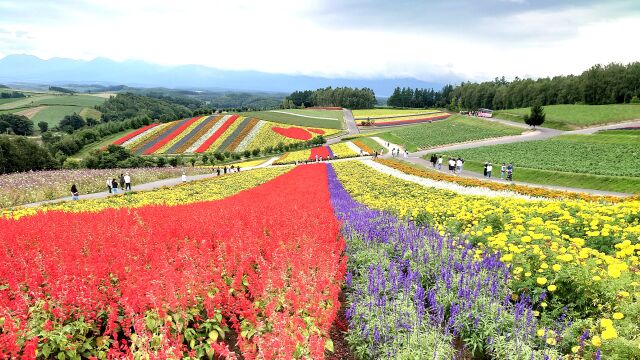
Biei’s scenery is split between two informal loops. North-west of the town is the Patchwork Road, gentler and more open, with the lone trees that ended up in car adverts; south-east is the Panorama Road, higher, with the wider views. Either can be driven in an hour or lost in half a day. They are working farmland, not a park — the one rule that matters is to stay on the roads and out of the fields.
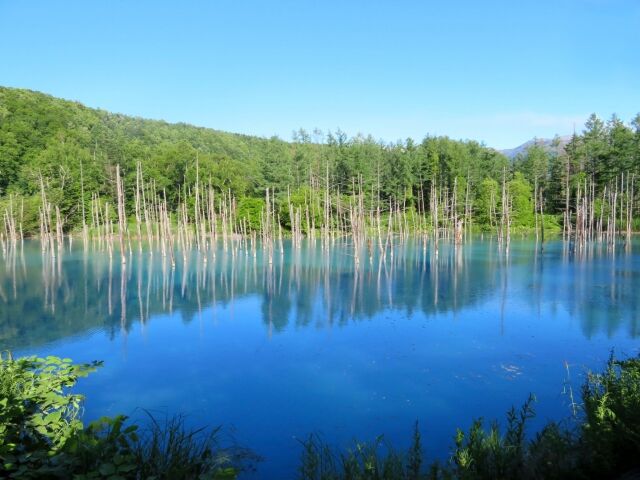
Up the valley toward Shirogane is the Blue Pond, whose colour is real and, in the right light, genuinely startling. It is also the most crowded stop on the route; early morning is the difference between a quiet pond and a full car park. The car park charges ¥1,000 for a regular car (raised from ¥500 in July 2026); it opens 7am–7pm from May to October and 8am–9:30pm through the winter light-up season.
§ 03
Furano: lavender, and the week that matters
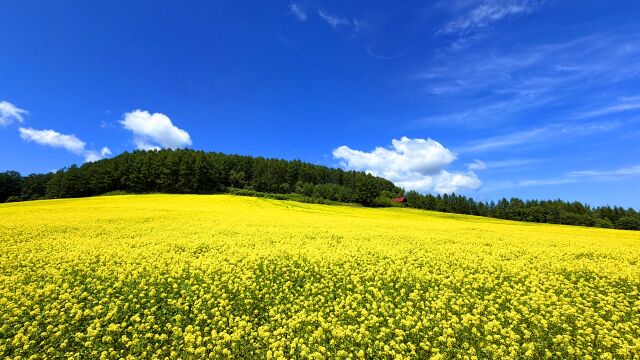
Furano’s lavender is why most people come, and the timing is narrower than the brochures suggest: the peak is a couple of weeks in mid-summer, not the whole season. Come a fortnight early and you get green rows; a fortnight late and they have been cut. In most years the peak falls in the first half of July, with the last rows cut by mid-August; Farm Tomita keeps a bloom diary if you want to pin a date.
Outside those weeks Furano is quieter and, to my mind, easier: the same hills without the coaches, plus the melon, cheese and wine the area trades on the rest of the year.
§ 04
Where to stay
Base yourself in the hills and you can drive the loops at the hours that matter — first light and last. Biei puts you closest to the Patchwork and Panorama roads and the Blue Pond; Furano is the better bet in lavender season, nearer the farms and the evening light over the rows. Both are small, and in July and August both book out early — reserve well ahead, or take a room in Asahikawa, twenty minutes north, where the choice is wider, the prices steadier, and the airport is on your way out.
§ 05
The same road, through the year
In summer the enemy is other people: tour coaches on the narrow hill lanes and full car parks by mid-morning. Drive the loops first thing, or in the last hour of light, and you get a different and better version of the same place.
Winter is a separate drive. Route 237 itself is ploughed and open, but the hill lanes and the Blue Pond road are snow-packed, and some minor attractions shut for the season; winter tyres are not optional. Rentals here come on winter tyres through the snow season, but confirm the dates with your company. Check same-day conditions on Hokkaido’s road-information site, 北の道ナビ, before you commit to the hill lanes and the Blue Pond road.
For a coastal counterpart to this inland day — cliffs, tunnels and improbably blue sea out to Cape Kamui — see the Otaru–Shakotan route.
Or point the car south instead: Sapporo to Hakodate runs the length of the island to its southern port.
Before you go
- Book the car early for July and August — lavender season sells the fleet out.
- Winter tyres come fitted on Hokkaido rentals through the snow season; confirm the exact dates with your company.
- Fill the tank in Asahikawa or Furano; stations thin out between the towns.
- Blue Pond parking is ¥1,000 for a car (from July 2026), open 7am–7pm May–Oct and 8am–9:30pm Nov–Apr.
- The hills are working farms — stay on the roads and out of the fields for photographs.
- In winter, check the day's conditions on 北の道ナビ before the hill lanes and the Blue Pond road.
Sources, and when I checked them
- Farm Tomita — lavender bloom diary checked 2026-08-10
- Blue Pond paid parking (Biei Town official) checked 2026-08-10
- White Gold Blue Pond (Biei Tourism Association) checked 2026-08-10
- Hokkaido road information / winter closures — 北の道ナビ checked 2026-08-10